The same bone tumor operation does not suit every part of the limb: replacing the end of a femur near the knee is fundamentally different from rebuilding a shaft, pelvis, shoulder, or hand. By matching the tumor’s location and surgical margins with the available reconstruction, you can understand which options preserve useful movement, weight-bearing, growth, and long-term stability.
Key takeaways
- MRI margins and soft-tissue involvement determine how much tissue must be removed.
- Femur, tibia, ankle, and foot tumors require different reconstruction strategies.
- Pelvic limb salvage demands separate planning for bone, nerves, vessels, and stability.
- Ask Mumbai specialists how each option affects function, complications, and rehabilitation time.
What determines the reconstruction before the operation is named?
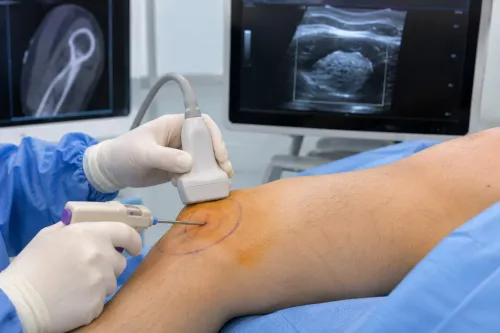
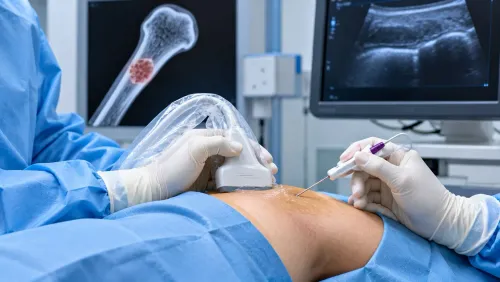
Tumor location is only the starting point, not the operation. MRI-defined margins, size, skip lesions, chemotherapy response, and the tumor’s compartment determine how much bone and soft tissue must be removed. A pathological fracture or infection can contaminate additional tissue and change limb salvage into a more extensive resection or amputation.
The biopsy must be planned by the definitive tumor-surgery team. An incorrectly placed tract can contaminate tissue planes and may need removal with the tumor, making reconstruction harder. Before choosing among limb salvage procedure types, assess these structures:
- Joint surfaces and growth plates: A joint-bearing bone end usually needs a megaprosthesis or joint reconstruction; an injured growth plate affects future limb length.
- Vessels and nerves: Major involvement can prevent a functional salvage result, even when the limb remains attached.
- Muscles, tendons, and skin: Their removal determines strength, stability, wound coverage, and whether a flap is needed.
A shaft tumor with preserved joints can be rebuilt with an intercalary graft, plate, nail, spacer, or graft-prosthesis composite. These options preserve native joints but carry risks such as nonunion, fracture, infection, and delayed healing.
The same principle answers “which limb salvage surgery for fits different bone tumor locations”: choose the reconstruction that follows the resection map, not the location label. Limb salvage requires both an oncologically wide margin and a limb that can be rebuilt into useful function.
Which reconstruction fits tumors of the femur, tibia, ankle, and foot?
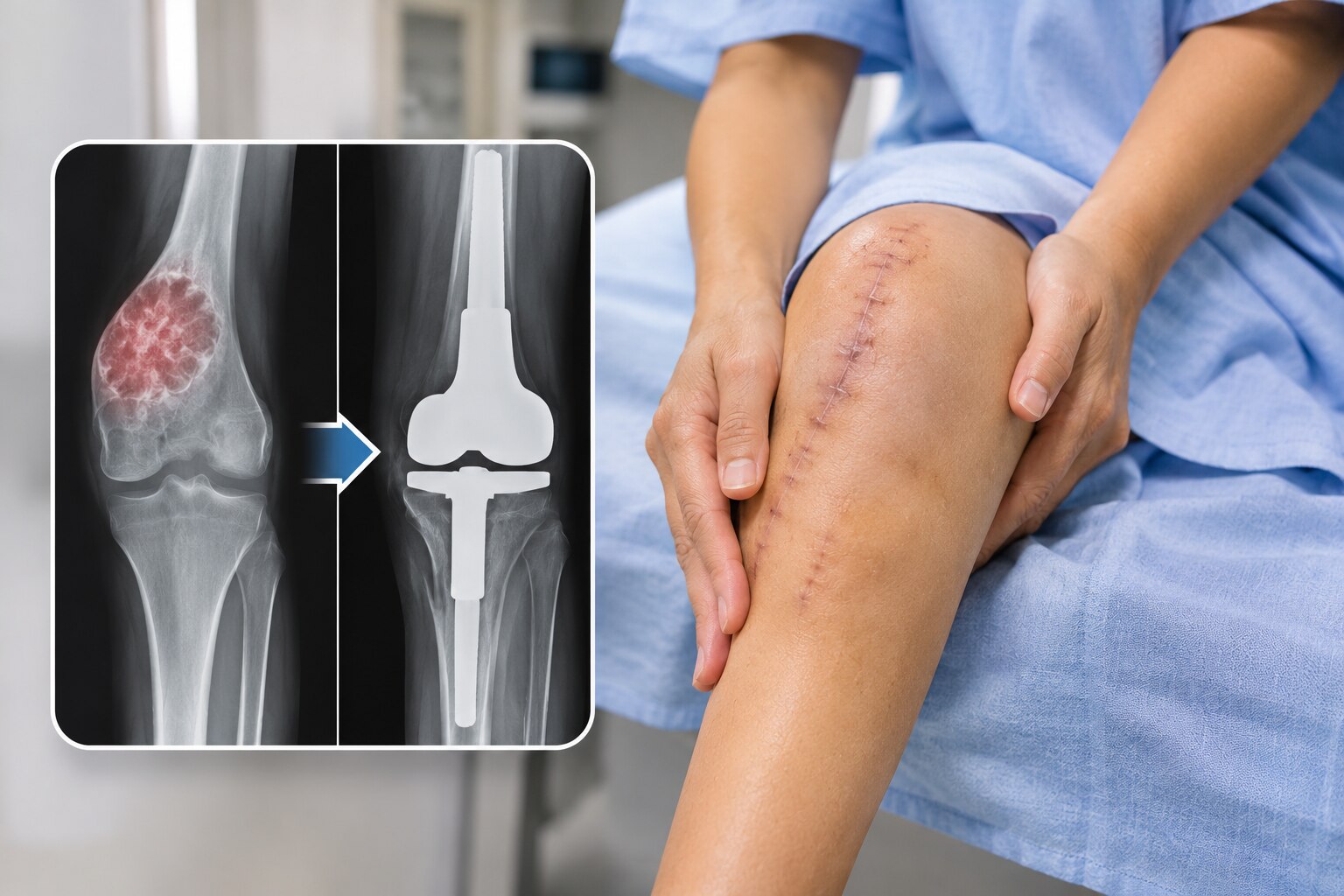
Distal-femur and proximal-tibia tumors near the knee usually need a modular metallic endoprosthesis, or megaprosthesis, after wide resection. It restores limb length and knee motion quickly, but infection, loosening, mechanical failure, and later revision remain significant trade-offs.
After proximal-tibial resection, the patellar tendon must be reattached or reconstructed, and a gastrocnemius flap often protects the implant with durable soft-tissue coverage.
| Location | Common reconstruction | Main trade-off |
|---|---|---|
| Upper femur | Proximal-femoral endoprosthesis with tumor-compatible hip replacement or oncologic hip reconstruction | Preserve the hip capsule and abductors to reduce limp and instability |
| Mid-shaft femur or tibia | Intercalary allograft, vascularized fibula, endoprosthetic spacer, plate, nail, or combined graft-prosthesis reconstruction | Native joints remain, but nonunion, fracture, and infection can occur |
| Ankle | Osteoarticular graft, arthrodesis, custom reconstruction, and tendon transfer | A stable, painless, plantigrade foot matters more than preserving ankle motion |
| Foot | Ray- or digit-sparing resection, segmental graft, arthrodesis, tendon transfer, or custom small-joint reconstruction | Removing a painful or unstable segment can produce better grasp or walking |
These limb salvage procedure types are chosen around the tissue that remains functional. The target is a stable, painless, plantigrade extremity for walking or a sensate, grasping hand or foot; preserving every bone is not automatically useful.
For selected children and adolescents with knee tumors, rotationplasty can create a durable, functional limb using the ankle as a knee. Expandable prostheses, growth-preserving resections, and biological reconstructions address remaining growth, but lengthening procedures, infection, mechanical failure, and joint problems remain possible. Each bone tumor limb reconstruction therefore balances immediate function against future revision.
How do shoulder, humerus, forearm, and hand tumors change the plan?
A working axillary nerve and deltoid often matter more than preserving every shoulder structure: together they provide active arm elevation after proximal-humerus resection. If the rotator cuff and deltoid must be removed, expect limited elevation or a reverse shoulder-type reconstruction rather than normal shoulder power.
| Option | Main trade-off | When it fits |
|---|---|---|
| Proximal-humeral endoprosthesis | Restores length quickly, but shoulder stability and active motion depend on remaining muscles | The joint-bearing bone end is removed and soft-tissue attachment is possible |
| Allograft-prosthesis composite | Provides bone stock and an implant, but risks nonunion, fracture, infection, and revision | Younger patients or substantial bone and joint reconstruction |
| Osteoarticular allograft | Preserves biological joint surfaces, but risks graft fracture, resorption, degeneration, and instability | Selected patients with useful soft-tissue support and a reconstructable shoulder |
A partial scapulectomy can preserve the glenoid, neurovascular structures, and key muscles, leaving a useful arm. Larger scapular or shoulder-girdle resections may need custom reconstruction, shoulder arthrodesis, or no structural replacement; the hand can remain useful despite poor elevation.
A shaft tumor with intact nearby joints suits intercalary grafting, a plate, nail, graft-prosthesis composite, or an endoprosthetic spacer. These bone tumor limb reconstruction choices preserve native joints but require attention to union and fixation.
In the forearm and hand, segmental grafting, arthrodesis, tendon transfer, and small-joint reconstruction compete with digit- or ray-sparing resection. Removing a painful, unstable segment can produce a stronger grasp than retaining it. Soft-tissue or muscle flaps provide coverage when bone or hardware lacks healthy tissue.
Why is pelvic limb salvage a separate reconstruction problem?
A pelvic resection must be mapped to its subsite, not treated like removal from a straight long bone. The answer to which limb salvage surgery for fits different bone tumor locations depends on whether the acetabulum, sacroiliac joint, iliac vessels, sciatic nerve, bowel, bladder, and weight-bearing muscles remain usable.
| Subsite | Reconstruction | Main trade-off |
|---|---|---|
| Acetabulum spared | Custom or modular pelvic implant, allograft, or structural reconstruction | Preserves the hip joint but demands durable fixation and soft-tissue coverage |
| Acetabulum removed | Complex endoprosthetic reconstruction or arthrodesis | Can restore support, but risks instability, infection, and limited hip motion |
| Major hemipelvis removed | Endoprosthesis, fusion, or flail-hip-type result | May preserve the leg while leaving weak hip control and difficult weight-bearing |
Muscle flaps can cover implants, fill dead space, protect vessels, and reduce wound breakdown when pelvic muscles or skin are removed. Sacrificing the sciatic nerve can produce a weak or insensate leg; iliac-vessel involvement raises bleeding and limb-perfusion risks, while bowel or bladder resection adds separate complications.
Internal hemipelvectomy means limb-preserving pelvic tumor resection; it is not automatically pelvic exenteration, which removes pelvic organs for selected cancers with different indications. A preserved leg can still have major functional loss after internal hemipelvectomy. External hemipelvectomy removes the limb when extensive neurovascular involvement, uncontrolled local disease, or impossible reconstruction prevents a safe, useful result.
Bone tumor limb reconstruction is not automatically better than amputation when the result cannot provide cancer control and meaningful function.
How should you compare limb-salvage options in Mumbai?
Ask, “Which limb salvage surgery for fits different bone tumor locations?” Then require a written plan, not only the procedure’s name:
- MRI-based resection map, expected surgical margin, and biopsy-tract removal plan
- Reconstruction name and the nerves, vessels, muscles, tendons, and skin at risk
- Expected knee, hip, shoulder, hand, and walking function
- Wound and infection risk, rehabilitation duration, and probability of revision
- The realistic amputation alternative, including expected function and prosthetic use
| Reconstruction | Main advantage | Main trade-off |
|---|---|---|
| Endoprosthesis | Earlier loading and joint restoration | Loosening, breakage, wear, infection, and revision |
| Allograft or vascularized graft | Bone stock and potential biological integration | Slow healing, nonunion, fracture, resorption, infection, and joint degeneration |
For a shaft tumor, ask whether an intercalary graft, vascularized fibula, plate, nail, spacer, or combined reconstruction preserves both nearby joints. A joint-end replacement has different risks from a biological shaft reconstruction.
For a child, request the projected limb-length difference, remaining growth, implant-lengthening schedule, and likely operations. Discuss rotationplasty plainly: it can provide durable weight-bearing through an ankle that functions as a knee, but its appearance, psychological impact, and rehabilitation demands require family and child-centred planning.
For limb salvage surgery options in Mumbai, verify one coordinated team covering musculoskeletal oncology, sarcoma pathology and radiology, medical and radiation oncology when indicated, complex reconstruction, plastic and vascular surgery, physiotherapy, prosthetics, infection management, and revision follow-up. A consultation with Dr Mishil Parikh can help you test these location-specific answers before choosing reconstruction.
Related services
Limb Salvage Surgery also known as limb-sparing surgery, is a procedure performed to remove a tumor or manage a severe injury in a limb while preserving the limb itself. View service → |
3D Printed & Computer Navigation Assisted Cancer Surgery 3D Printed & Computer Navigation Assisted Cancer Surgery 3D printing and computer navigation technologies have revolutionized the field of cancer surgery, particularly in complex cases that require precise... View service → |
Frequently asked questions
What determines the reconstruction before the operation is named?
MRI-defined margins, tumor size, skip lesions, chemotherapy response, and the involved tissue compartment determine the resection and reconstruction plan. A pathological fracture or infection can extend the contaminated area and change the operation.
Which reconstruction fits tumors of the femur, tibia, ankle, and foot?
The choice depends on the exact bone segment removed, joint involvement, remaining soft tissue, and the limb’s required stability. Reconstruction may involve a segmental implant, allograft, fusion, or another location-specific method.
How do shoulder, humerus, forearm, and hand tumors change the plan?
Surgeons balance tumor clearance with shoulder, elbow, wrist, hand, nerve, and tendon function. The reconstruction must match the joint or bone removed and preserve useful movement where safe.
Why is pelvic limb salvage a separate reconstruction problem?
Pelvic tumors can involve the hip socket, major vessels, nerves, muscles, and weight-bearing structures. Reconstruction must restore pelvic stability and leg support while achieving safe tumor removal.
How should you compare limb-salvage options in Mumbai?
Ask each specialist to explain the planned resection, reconstruction type, expected function, complications, rehabilitation length, and what happens if margins or reconstruction fail.
Related service
Pelvic Resection also known as pelvic exenteration, is a surgical procedure that involves the removal of a portion or the entirety of the pelvic organs and... View service → |
Keywords