Limb salvage can be suitable for a child when doctors can remove the tumour with wide, safe margins and leave a limb that will remain useful through growth and recovery. Families will learn which tests and treatment stages guide that decision, how salvage compares with amputation, and what to check when seeking a specialist team in Mumbai.
Key takeaways
- Limb salvage requires wide tumour removal and a functional, stable remaining limb.
- MRI, biopsy, staging scans and treatment response guide the surgical plan.
- Growth plates, reconstruction type and future limb-length differences shape decisions.
- Ask about paediatric oncology, reconstruction, rehabilitation and long-term follow-up experience.
When can a child’s limb be safely preserved?
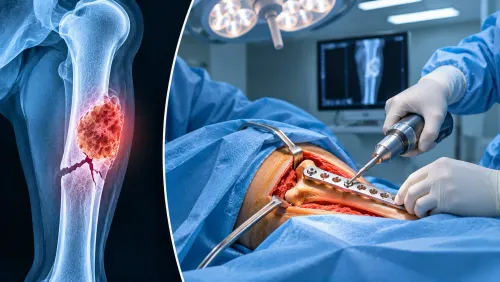
Limb salvage can suit children with bone cancer in Mumbai when surgeons can remove the tumour with wide, clear margins and leave a usable limb.
The decision depends on tumour location and size, MRI findings around major nerves and blood vessels, spread to the lungs or elsewhere, infection, chemotherapy response, growth stage, and whether reconstruction can produce a functional hand or foot.
A major vessel or nerve does not automatically require amputation. Encasement or invasion that prevents safe reconstruction, uncontrolled spread, extensive infection, or a reconstruction likely to leave a nonfunctional limb can make amputation safer and more useful. Appearance comes after local cancer control.
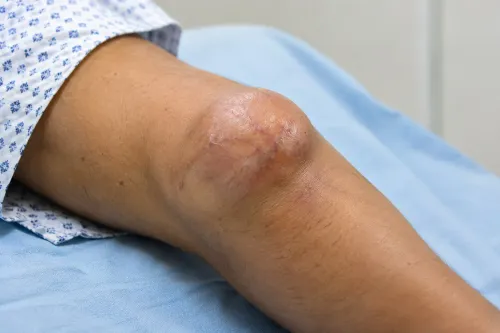
A suspected bone tumour cannot be classified or treated by appearance alone. Osteosarcoma and Ewing sarcoma require different treatment plans from benign bone tumours, so biopsy, staging, and specialist review come before choosing an operation.
| Option | Cancer control | Main decision points |
|---|---|---|
| Limb salvage | Comparable when the tumour is completely removed | Function, reconstruction complications, rehabilitation, recurrence, and future operations |
| Amputation | Comparable when it achieves complete tumour removal | Prosthetic function, rehabilitation, complications, and long-term prosthesis needs |
Families should compare the proposed margin and expected function, not simply whether the limb remains. Salvage with positive margins or persistent local disease is not a success; a reliable prosthesis can serve a child better than a preserved but unusable hand or foot.
Which tests and treatment stages come before surgery?
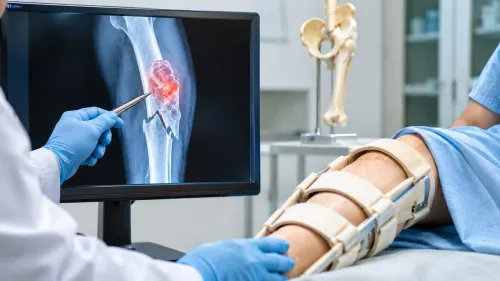
Doctors confirm the diagnosis and operation plan in stages, not from an X-ray alone. X-rays show the bone lesion and structural damage; MRI must cover the entire involved bone, adjacent joint and surrounding soft tissues. CT of the chest checks for lung spread.
PET-CT or a bone scan is added when staging requires a search for disease elsewhere, alongside blood tests such as blood counts, kidney and liver function, alkaline phosphatase and lactate dehydrogenase.
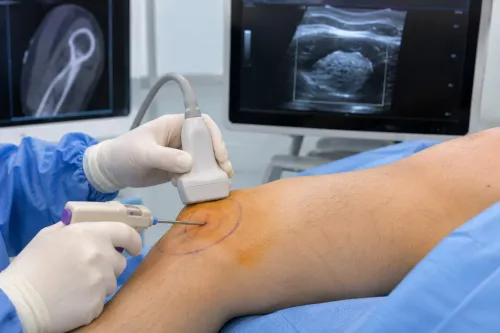
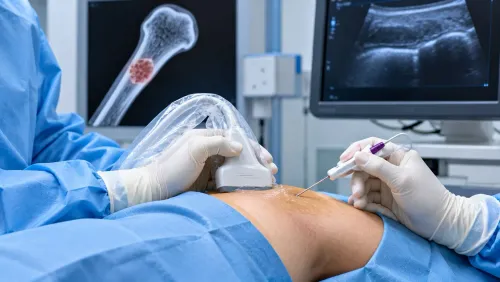
A biopsy is part of planning, not a separate formality. An orthopaedic oncology team must choose the incision or needle path so it can be removed with the tumour. A poorly placed biopsy track can contaminate extra tissue and force a wider resection.
The usual sequence is:
- Imaging of the primary tumour and chest.
- Planned biopsy, followed by specialist pathology review.
- Staging and multidisciplinary tumour-board review.
- Chemotherapy when indicated.
- Surgery for local control.
- Postoperative chemotherapy or other treatment.
Treatment differs by diagnosis:
| Diagnosis | Systemic treatment | Local control |
|---|---|---|
| Osteosarcoma | Chemotherapy before and after surgery is central | Surgery usually provides local control |
| Ewing sarcoma | Chemotherapy is central | Surgery, radiation therapy, or both |
The tumour board should review the scans and biopsy material before major child bone cancer surgery. Its members may include paediatric oncology, orthopaedic oncology, radiology, pathology, radiation oncology and rehabilitation specialists.
How do growth and reconstruction change the choice?
A child’s skeleton is still growing, so a reconstruction that works at age 8 may not remain level or well matched at age 14. Open growth plates, the tumour’s distance from a growth plate, changing bone size and predicted growth all affect the plan.
Removing or damaging a growth plate can cause progressive limb-length inequality after an initially successful operation; shoe lifts, growth-plate surgery on the opposite limb or later lengthening may enter the discussion.
Reconstruction choices involve different costs and risks:
- Allograft or another biological reconstruction preserves living bone, but nonunion, fracture, infection and graft resorption can delay healing or lead to failure.
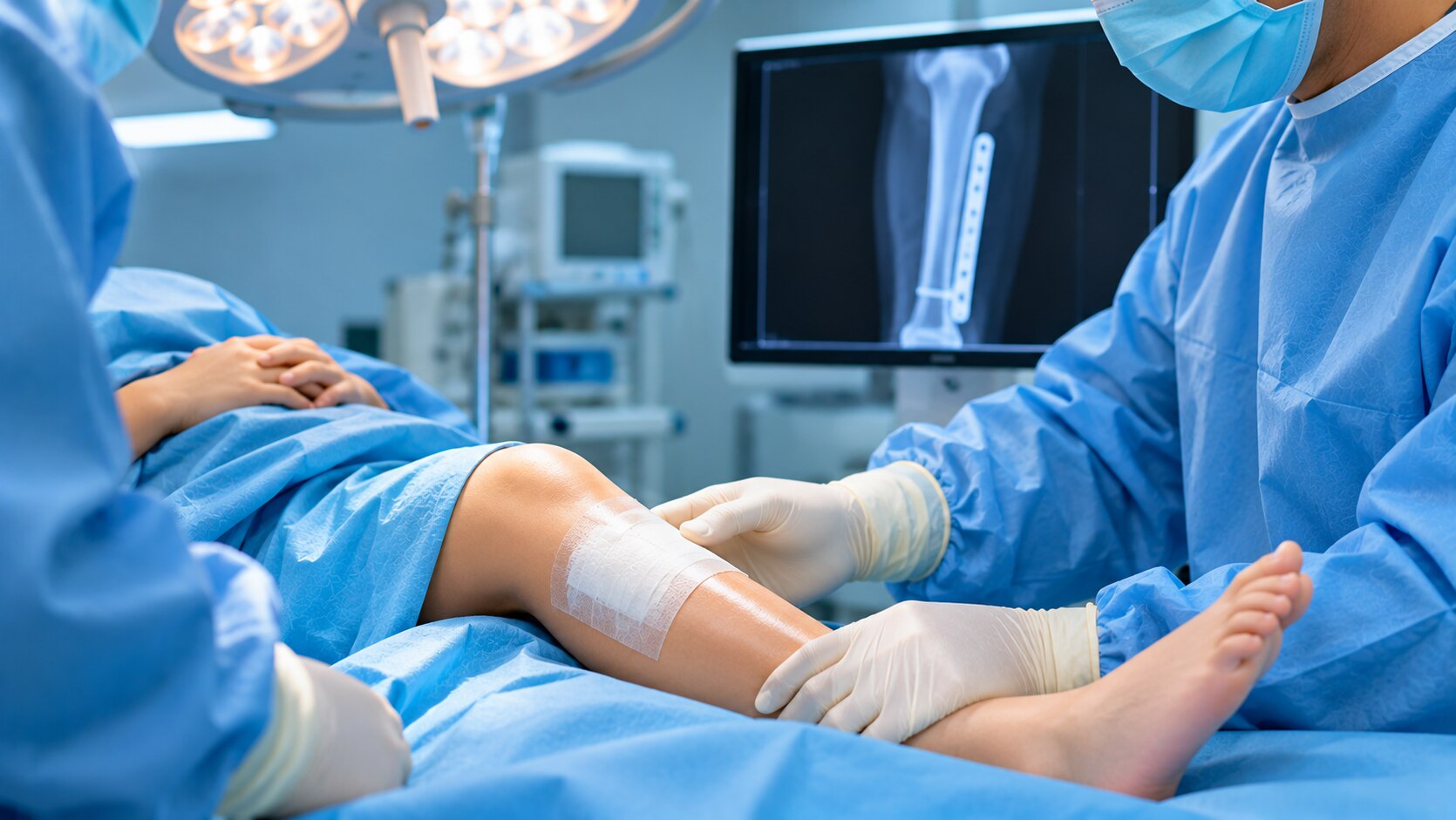
- An endoprosthesis restores limb length and joint function, but it can loosen, wear out or require revision.
- An expandable implant accommodates growth, yet repeated lengthening procedures and later revisions may be necessary.
- An autograft uses the child’s own bone, but healing problems and pain or weakness at the donor site remain possible.
- Rotationplasty suits selected tumours around the knee. The lower leg and foot are rotated so the ankle acts as a knee inside a prosthesis; it can accommodate growth and be durable, but appearance and acceptance matter.
A child may need several operations as the skeleton grows or an implant wears out. Limb preservation surgery in Mumbai does not guarantee normal movement, strength, gait or return to high-impact sport, so ask for the expected final limb length, rehabilitation demands and number of likely future operations.
What recovery and long-term problems should families plan for?
Hospital recovery includes wound checks, pain control, dressing changes and physiotherapy. Your child may need a protected or non-weight-bearing period, then crutches, a walker or another assistive device. School return depends on strength, transport, fatigue and chemotherapy; expect interrupted attendance, home study and restrictions on running, jumping and contact sports.
| Reconstruction | Practical burden | Problems to plan for |
|---|---|---|
| Biological graft | Longer protection and rehabilitation; later imaging | Nonunion, fracture, infection or graft resorption |
| Endoprosthesis | Gradual weight-bearing; prosthesis care and future revisions | Loosening, wear, breakage, stiffness or limb-length difference |
| Amputation | Prosthetic training and replacement maintenance | Skin problems, socket changes, pain and functional limits |
Chemotherapy appointments, repeated imaging, rehabilitation, travel and school disruption can continue for years. A growing child may need prosthesis maintenance, lengthening procedures or revision surgery; no fixed timeline or cost applies.
Discuss infection, wound problems, stiffness, fracture, implant loosening or wear, deformity, limb-length difference, local recurrence and loss of function. Ask about the planned surgical margin, expected final limb length, reconstruction type, likely number of operations, complication and revision rates, rehabilitation duration, and the backup plan if reconstruction fails.
Seek urgent advice for fever, increasing wound drainage, severe swelling, new numbness, a cold or pale foot, sudden pain or loss of movement. Families researching limb salvage surgery children in Mumbai should compare amputation when it offers a more reliable functional result.
How can families find the right limb salvage team in Mumbai?
A centre’s ability to offer limb salvage is not enough. For limb preservation surgery in Mumbai, ask whether the unit regularly treats paediatric sarcoma and can support a child from diagnosis through growth, reconstruction and long-term follow-up.
1. Verify access to paediatric oncology, musculoskeletal tumour pathology, MRI and staging review, paediatric anaesthesia, intensive care, physiotherapy, prosthetic services and long-term follow-up.
2. Ask whether the team can coordinate blood-vessel or nerve reconstruction when required, and manage infection, implant failure, fracture, loosening and revision surgery.
3. Bring imaging discs and reports, biopsy slides or tissue blocks, pathology reports, chemotherapy records and a current medication list. Record the child’s growth, pain, walking ability, school attendance and sports participation.
4. Seek a second opinion that includes review of the original scans, biopsy material and treatment plan by a specialist tumour board. Ask specifically whether the proposed operation can achieve safe margins, what reconstruction is planned, how many future operations are likely, and what happens if it fails.
Dr Mishil Parikh can be one point of contact for families seeking orthopaedic oncology assessment in Mumbai. The decision should remain a joint discussion involving paediatric oncology, pathology, radiology, rehabilitation and your family.
The useful question is not simply “Can limb salvage surgery suit children with bone cancer in Mumbai?” It is whether the team can provide safe cancer control and a usable limb through reconstruction, growth and later care.
Related service
Limb Salvage Surgery also known as limb-sparing surgery, is a procedure performed to remove a tumor or manage a severe injury in a limb while preserving the limb itself. View service → |
Frequently asked questions
When can a child’s limb be safely preserved?
Limb salvage is considered when surgeons can remove the tumour with wide, clear margins while preserving enough nerves, blood vessels, joints and healthy tissue for a usable limb. Amputation may be safer when the tumour cannot be fully removed or the limb would not function after surgery.
Which tests and treatment stages come before surgery?
The work-up usually includes X-rays, an MRI of the affected area, a planned biopsy and staging scans such as a chest CT. Children with osteosarcoma or Ewing sarcoma usually receive chemotherapy before surgery, followed by an operation planned around the tumour’s response.
How do growth and reconstruction change the choice?
The team evaluates open growth plates, expected remaining growth, the affected bone and nearby joint. Reconstruction may use expandable or fixed implants, a biological graft or another method; each option has different revision, infection, fracture and limb-length risks.
What recovery and long-term problems should families plan for?
Recovery can include wound care, pain control, physiotherapy and gradual weight-bearing. Families should discuss infection, implant failure, stiffness, fracture, recurrence, limb-length difference, repeated operations and the schedule for imaging and rehabilitation.
How can families find the right limb salvage team in Mumbai?
Look for a coordinated paediatric oncology team that includes orthopaedic tumour surgeons, medical oncologists, radiologists, pathologists, reconstructive specialists and physiotherapists. Ask how often they treat children with bone tumours and which reconstruction and follow-up services are available.
Keywords