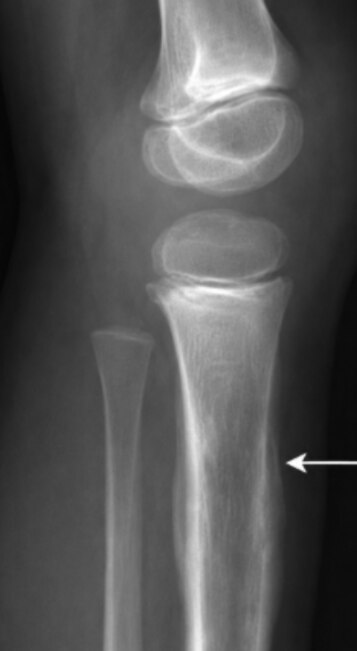
Persistent bone pain, swelling, limping, or a lump in a child or young adult deserves attention when it does not behave like an ordinary injury. By the end, you will know which warning signs matter, how diagnosis and staging work, why biopsy planning affects treatment, and what questions to ask about chemotherapy, surgery, radiation, fertility, and follow-up.
Key takeaways
- Persistent bone pain, swelling, or a limp needs medical assessment.
- Diagnosis usually requires imaging, biopsy, and molecular testing for an EWSR1 fusion.
- Treatment combines chemotherapy with surgery, radiation, or both.
- Ask about fertility preservation before chemotherapy begins.
What Ewing Sarcoma Is and Who It Affects
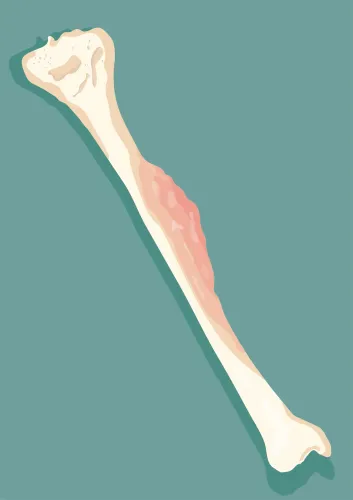
Ewing sarcoma is an aggressive cancer in the small-round-cell sarcoma family. It can begin inside bone—often the pelvis, thighbone, shinbone, ribs, or spine—or in soft tissue beside bone. The defining clue is usually a rearrangement involving the EWSR1 gene, most commonly the EWSR1-FLI1 fusion, also written EWSR1::FLI1 fusion.
An EWSR1 rearrangement alone does not prove Ewing sarcoma: other tumors can carry one, so pathologists combine cell appearance, immunohistochemistry, and molecular testing. A positive CD99 stain alone is not enough.
| Feature | Ewing sarcoma | Osteosarcoma | Other small round-cell tumors |
|---|---|---|---|
| Typical origin | Bone or soft tissue | Usually bone | Bone or soft tissue, depending on the tumor |
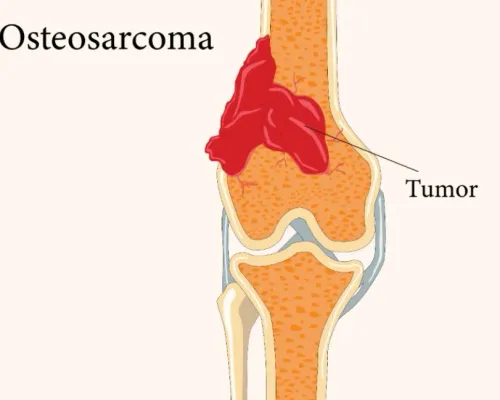
| Key diagnostic distinction | EWSR1-ETS fusion, most often EWSR1::FLI1 | Malignant osteoid made by tumor cells | Different genetic and microscopic findings |
Ewing sarcoma most often affects adolescents and young adults, with many diagnoses during the teenage years and early 20s. It is uncommon before age 5 and after age 30, although age alone cannot exclude it.
Persistent localized pain, swelling, or a growing lump deserves attention when it worsens at night or with activity, causes limping or reduced limb use, or comes with fever, fatigue, weight loss, or an unexplained fracture. These features can mimic a sports injury, infection, or growing pains.
Symptoms That Can Look Like Growing Pains or a Sports Injury
A minor strain should start improving with rest, while growing pains do not usually stay in one spot or limit daytime activity. Pain that persists, worsens, or returns after an apparent injury deserves a medical review rather than repeated treatment as a sprain.
| Pattern | More consistent with a routine explanation | Needs medical review |
|---|---|---|
| Pain | Muscle soreness follows activity and improves over days | Persistent bone pain continues for weeks or steadily worsens |
| Timing | Growing pains affect both legs, occur in the evening, and resolve by morning | Night pain wakes the child or remains focused in one area |
| Function | Walking and limb use return as soreness settles | Limping in children, reduced use of an arm, or refusal to bear weight persists |
| Visible change | No lasting change in shape or size | Swelling or lump enlarges or feels fixed and deep |
Fever can point toward infection, but it does not rule out a tumor; Ewing sarcoma can cause fever, fatigue, weight loss, or raised inflammatory blood tests. An unexplained fracture through weakened bone also needs assessment.
Seek urgent care today for severe or rapidly escalating pain, inability to walk or use the limb, a rapidly enlarging mass, marked redness with fever, numbness or weakness, a pale or cold limb, or suspected fracture.
For less dramatic symptoms, arrange a prompt examination when pain lasts beyond a normal recovery period, repeatedly wakes the child, or has no clear injury.
How Doctors Confirm the Diagnosis and Look for Spread
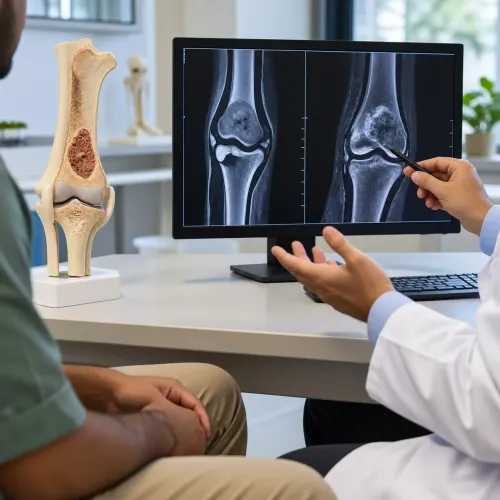
A scan cannot confirm Ewing sarcoma. A biopsy does: a pathologist examines the tissue, and molecular testing usually looks for the characteristic EWSR1 rearrangement, most commonly an EWSR1-FLI1 fusion. The biopsy must follow imaging, not precede it blindly.
A typical Ewing sarcoma diagnosis and staging work-up includes:
- MRI of the entire involved bone, including the adjacent joint, to show the primary tumor and any skip lesions. MRI of only the painful segment can miss disease elsewhere in that bone.
- Chest CT to detect small lung metastases that a chest X-ray may miss.
- Whole-body FDG-PET-CT or bone scan to assess other bones; the treatment protocol determines which test is used.
- Blood tests and, when indicated by the protocol or imaging, bone-marrow evaluation.
Plan the biopsy with the orthopedic oncology team responsible for definitive treatment. The incision or needle track must sit where surgeons can remove it en bloc with the tumor. A poorly placed incision, contamination of several tissue compartments, or an unnecessarily large open biopsy can make limb-sparing surgery harder and sometimes require a wider resection.
Doctors call the disease localized when staging finds no spread beyond the primary tumor. They call it metastatic when cancer is found in the lungs, other bones, or bone marrow.
Lung-only spread generally has a better outlook than bone or marrow involvement, but all metastatic disease requires systemic treatment; selected patients also receive treatment aimed at metastatic sites.
Treatment Decisions: Chemotherapy, Surgery, Radiation, and Reconstruction
Even when scans show no metastases, doctors use multiagent Ewing sarcoma chemotherapy because microscopic spread is assumed. Interval-compressed chemotherapy, given every two weeks with growth-factor support when appropriate, is commonly used before and after local control. Lung-only spread has a better outlook than bone or bone-marrow spread, but all metastatic disease requires systemic treatment.
| Option | Main advantage | Main trade-off | When considered |
|---|---|---|---|
| Limb-sparing surgery | Preserves the limb after wide tumor removal | Reconstruction can fail, require revision, or leave a weak or painful limb | When surgeons can obtain a clear margin and retain useful nerves, vessels, and function |
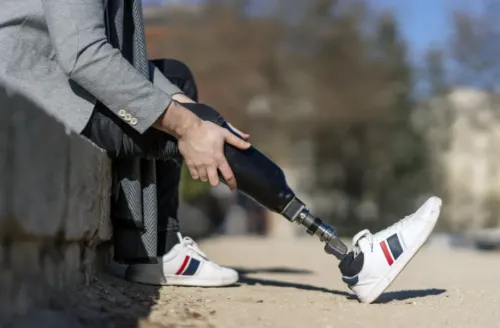
| Amputation | Removes the tumor and contaminated tissue with predictable local control | Permanent limb loss and prosthetic rehabilitation | When major nerves or vessels are involved, infection or extensive contamination exists, or salvage would be nonfunctional |
| Radiation therapy for Ewing sarcoma | Treats tumors that cannot be safely removed | Can affect growing bone, fertility, and future second-cancer risk | For unresectable disease or selected cases with positive margins, poor chemotherapy response, or high recurrence risk |
| Reconstruction | Restores stability, length, or movement after resection | Infection, loosening, fracture, growth disturbance, and later operations | Chosen according to age, tumor location, expected growth, and the child’s functional goals |
The percentage of tumor necrosis after chemotherapy helps estimate prognosis; it is not a pass-or-fail result and does not alone justify changing treatment. Discuss fertility preservation before chemotherapy or pelvic radiation, because cyclophosphamide, ifosfamide, and pelvic radiation can impair reproductive function.
A multidisciplinary team, such as one including Dr Mishil Parikh, should compare cancer control with long-term function before recommending salvage or amputation.
Related services
Sarcoma / Musculoskeletal / Orthopaedic Oncology Bone Sarcoma, Benign Bone Tumor Bone sarcoma and benign bone tumors are two distinct types of bone conditions. 1. View service → |
Pathological Fracture A pathological fracture, also known as a pathologic fracture, is a type of bone fracture that occurs as a result of an underlying disease or... View service → |
Recovery, Fertility, and Follow-Up After Treatment
Recovery continues after chemotherapy and local treatment. Plan for wound care, pain control, physiotherapy, strength rebuilding, school or work adjustments, and emotional support. Discuss fertility preservation before treatment whenever timing allows: cyclophosphamide, ifosfamide, and pelvic radiation can impair ovarian or testicular function, with options depending on age, puberty, sex, and treatment urgency.
Ewing sarcoma follow-up is usually most intensive during the first several years and commonly includes:
- Examination of the original tumor area, surgical scar, limb function, and pain
- Imaging of the primary region to assess healing and local Ewing sarcoma recurrence
- Chest imaging because the lungs are a frequent relapse site
- Review of mobility, rehabilitation progress, menstrual or testicular function, and new symptoms
Long-term visits also screen for late effects of chemotherapy, including anthracycline-related heart damage and ifosfamide-related kidney injury, plus endocrine problems and second cancers. Report persistent cough, new bone pain, swelling, weakness, or unexplained fatigue rather than waiting for the next appointment.
Reconstruction requires its own surveillance. An endoprosthesis can later loosen, become infected, break, or need revision as a child grows; a biologic reconstruction can unite slowly or fracture. Ask how growth plates, expected height, activity goals, and rehabilitation demands affect the plan, because reconstruction failure can limit function even when cancer control is successful.
Frequently asked questions
What is Ewing sarcoma?
Ewing sarcoma is an aggressive small-round-cell sarcoma that can start in bone or soft tissue. It is commonly associated with an EWSR1-FLI1 gene fusion.
What symptoms can Ewing sarcoma cause in children and young adults?
Symptoms include persistent bone pain, swelling, a limp, reduced movement, or pain mistaken for growing pains or a sports injury.
How do doctors confirm Ewing sarcoma?
Doctors use imaging to assess the suspected tumor and possible spread, then confirm the diagnosis with a biopsy and molecular testing.
How is Ewing sarcoma treated?
Treatment usually involves chemotherapy alongside local treatment with surgery, radiation, or both. Reconstruction may be needed after tumor removal.
What follow-up is needed after Ewing sarcoma treatment?
Follow-up checks for recurrence, treatment effects, function, and recovery. Fertility discussions should happen before treatment when chemotherapy could affect reproductive health.