Modern cancer surgery can preserve an affected arm or leg in many patients, but amputation surgery remains necessary in selected situations. When it is recommended for bone or soft-tissue cancer, the decision is based on achieving safe tumor removal and considering the function that can realistically be preserved.
For patients and families, understanding why amputation has been proposed can make a difficult treatment decision more informed.
Why Might Amputation Be Recommended?
The feasibility of limb preservation depends on the location and extent of the tumor.
Amputation may be considered when
- The tumor extensively involves critical nerves
- Major blood vessels cannot be safely preserved or reconstructed in a suitable manner
- Adequate cancer margins cannot otherwise be achieved
- Severe infection complicates reconstruction
- Previous procedures have significantly affected local tissues
- Limb preservation would leave extremely limited function
- Local disease has returned in a way that restricts reconstructive options
These situations are highly individual. A large tumor does not automatically mean amputation, just as a smaller tumor does not automatically guarantee limb preservation.
What Is the Main Surgical Goal?
The primary goal is complete removal of the cancer with an appropriate margin.
Before surgery, MRI and other investigations are reviewed to understand the relationship between the tumor and surrounding structures. The surgeon considers how much tissue must be removed to achieve oncological clearance.
The level of amputation is selected according to the location of disease and the amount of healthy tissue that can safely be retained.
Why Function Matters in the Decision
A preserved limb is valuable when it is safe and reasonably functional.
If limb-salvage surgery would leave a painful, unstable or minimally functional extremity after multiple complex procedures, amputation may sometimes provide a more predictable functional pathway.
This discussion needs to be individualized. Age, occupation, lifestyle, tumor location, rehabilitation potential and patient priorities all matter.
What Happens Before Surgery?
Preoperative planning can include
- Review of pathology
- Review of MRI and staging scans
- General medical assessment
- Discussion of the surgical level
- Rehabilitation planning
- Pain-management planning
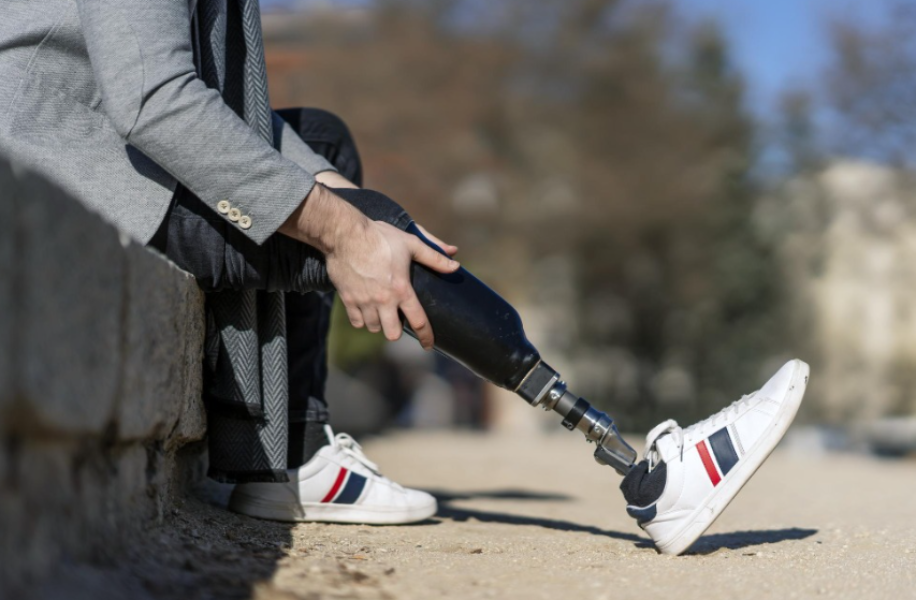
- Discussion of prosthetic possibilities when applicable
Patients should use this stage to ask detailed questions about mobility, wound healing and the expected recovery process.
What Does Rehabilitation Involve?
Rehabilitation starts with safe recovery from surgery and gradually progresses toward independence.
Depending on the type of operation, rehabilitation can include
- Wound care
- Swelling management
- Maintaining strength
- Joint mobility exercises
- Balance training
- Transfer training
- Walking rehabilitation
- Prosthetic assessment when appropriate
A prosthesis is not fitted immediately in every case. Timing depends on wound healing, swelling, strength and overall cancer treatment.
Emotional Adjustment Is Also Part of Recovery
Amputation changes both physical function and body image. Patients may need time to adapt to the change while simultaneously managing cancer treatment.
Clear information before surgery can help families prepare practically for the recovery period. Understanding rehabilitation goals, home requirements and anticipated assistance can make the transition more manageable.
Questions to Ask When Amputation Has Been Recommended
A detailed surgical consultation should clarify
- Why is amputation recommended in this case?
- Can the tumor be removed safely through limb-salvage surgery?
- What function would be expected after limb preservation?
- What level of amputation is planned?
- What are the major surgical risks?
- When can rehabilitation begin?
- Could a prosthesis be suitable?
- What cancer treatment will be needed afterward?
- How will follow-up and surveillance be organised?
Surgical Assessment in Mumbai
Patients facing major musculoskeletal cancer surgery often benefit from understanding all technically reasonable surgical options before treatment.
Dr Mishil Parikh provides surgical oncology evaluation in Mumbai for patients with bone and soft-tissue tumors, including individuals being assessed for limb preservation and amputation surgery.
Patients from Mumbai and other parts of Maharashtra should bring their biopsy report, pathology information, MRI, X-rays and staging scans to the consultation whenever available.
An amputation recommendation should come from a careful assessment of tumor clearance, anatomy, reconstruction possibilities and expected function. The purpose is not simply removal of a limb. It is to achieve appropriate cancer control while creating the strongest possible foundation for rehabilitation, mobility and long-term functional recovery.
Keywords