A new lump, persistent pain or a lung nodule after osteosarcoma treatment needs structured assessment, not an immediate assumption that the cancer has returned. By the end, you will know how recurrence is confirmed, which records affect treatment, when repeat surgery is possible and how to assess a bone tumour specialist in Mumbai.
Key takeaways
- Ask whether recurrence is local, pulmonary, distant, or combined.
- Bring pathology reports, scans, operative notes, and implant details to review.
- Repeat limb salvage depends on tumour location, margins, vessels, nerves, and reconstruction.
- Choose a specialist experienced in recurrent bone sarcoma surgery and multidisciplinary care.
What does recurrence mean after osteosarcoma treatment?
Recurrence means that osteosarcoma has appeared again after treatment, either at the original bone operation or somewhere else. The main patterns are a local tumour in or near the surgical site, pulmonary recurrence in the lungs, recurrence in another organ or bone, or local and distant disease together.
The risk is highest during the first few years, so follow-up usually includes regular examination and imaging of the original site and chest. Surveillance often becomes less frequent over time rather than stopping abruptly, because late recurrence remains possible years after treatment.
- A new lump, pain, reduced movement or abnormal scan does not prove recurrence.
- Scar tissue, an implant, infection, healing change or a benign lung nodule can look suspicious.
- Doctors compare earlier and current images and use targeted imaging or biopsy when needed.
- Chest imaging matters even when the new symptom is in the operated limb, because lung recurrence can occur without local disease.
- Bring the original pathology report, operative notes, chemotherapy records and actual MRI and chest-CT images when seeking care for bone sarcoma returns in mumbai.
Disease confined to one site may allow a focused operation or removal of a lung lesion after full review. Several sites require a broader plan involving systemic treatment, clinical trials and coordinated surgery; removing one lesion alone may not control the disease.
How do doctors confirm that osteosarcoma has returned?
Doctors confirm recurrence by combining examination, imaging and, when necessary, tissue diagnosis. A new lump, pain or abnormal scan can result from scar tissue, infection, reconstruction changes or recurrence, so current findings must be compared with the original pathology and earlier images.
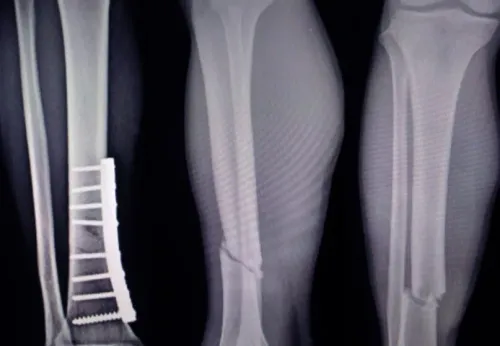
- Plain radiographs show changes in the operated bone, implant or nearby mineralised tissue.
- MRI of the original surgical site defines a suspected local mass and its relationship to bone, muscle, blood vessels and nerves.
- Contrast-enhanced CT of the chest looks for pulmonary metastases, including nodules too small or deep to detect on examination.
- PET-CT or a bone scan adds whole-body staging information when the clinical picture or other scans require it.
A lung nodule is not automatically metastatic osteosarcoma. Its size, number, shape, growth on serial CT, and the person’s symptoms and treatment history guide the choice between interval CT, biopsy and treatment.
A suspected local recurrence should reach a bone-sarcoma multidisciplinary team before biopsy or definitive surgery. If tissue is needed, the team must plan the biopsy tract along a route that can be removed with the tumour; an improvised route can contaminate tissue planes and force a larger operation.
For anyone researching recurrent osteosarcoma treatment in Mumbai, bring the original pathology report, slides or tissue blocks, operative notes, chemotherapy records, implant details, and actual MRI and chest-CT images—not only written reports.
Which records and surgical details determine whether repeat limb salvage is possible?
A repeat limb-salvage decision starts with the original pathology report, not the latest scan summary. Tumour grade, margin status, chemotherapy response, operative notes, implant or endoprosthesis design, and actual MRI and contrast-enhanced chest-CT images show what was removed, what remains, and whether the new lesion is truly recurrent.
Bring these records to review:
- Original pathology report, plus slides or tissue blocks when available
- Tumour grade, necrosis or chemotherapy-response findings, and margin status
- Chemotherapy drugs, doses, dates, delays and toxicities
- Operative notes, implant serial details and endoprosthesis records
- The MRI and chest-CT image files, not only radiology reports
The recurrent tumour’s size and position must be mapped against scar tissue, remaining bone, muscle loss, the prior reconstruction, infection risk, and major nerves or blood vessels.
Repeat surgery is harder when an endoprosthesis is loose or infected, or when the tumour encases a vessel; an osteosarcoma recurrence surgeon in Mumbai may need vascular, plastic and revision-reconstruction expertise alongside tumour surgery.
| Option | What it means | When it applies |
|---|---|---|
| Wide resection with revision reconstruction | Remove recurrence with a clear margin, then rebuild the limb | Local disease remains removable with useful bone, soft tissue and nerve function |
| Endoprosthetic replacement | Replace resected bone and joint with a custom or modular implant | Major bone or joint loss leaves inadequate support for simpler reconstruction |
| Allograft | Use donor bone to restore structural length | The defect and soft-tissue conditions support biological reconstruction |
| Rotationplasty | Remove the tumour and rotate the lower limb so the ankle functions as a knee | A durable, functional limb is possible but standard salvage cannot provide it |
Amputation becomes safer when major nerves or vessels prevent a clear margin, infection makes reconstruction unreliable, or the salvaged limb would be painful and nonfunctional. A second opinion before an irreversible operation should address margins, function, complications, alternatives, and the plan if pathology finds an inadequate margin.
How is local recurrence different from recurrence in the lungs?
A local recurrence is assessed for wide oncologic resection: removing the tumour with an adequate margin, then rebuilding the bone or limb when feasible. Limb salvage is not automatically the safest choice; involvement of major nerves or vessels, impossible margins, or a painful, nonfunctional reconstruction can make amputation or rotationplasty more appropriate.
Lung-only recurrence may lead to discussion of pulmonary metastasectomy when the original tumour is controlled, every visible lung nodule can be removed, and cardiopulmonary reserve is adequate. Complete clearance is an important goal, but surgery does not guarantee cure; new nodules can appear after one or more chest operations.
Multiple, unresectable or rapidly progressing metastases shift the balance toward systemic treatment or a clinical trial. There is no single dependable second-line regimen, so the choice depends on prior chemotherapy, time since treatment, kidney, liver and heart function, expected toxicity, resectability and trial availability.
- Ifosfamide-based treatment may be considered when previous drugs and organ function make it reasonable.
- Gemcitabine/docetaxel is another individualized salvage option.
- Other salvage regimens require the same review because responses can be limited and toxicity substantial.
For recurrent osteosarcoma treatment in Mumbai, bring the original pathology, operative notes, chemotherapy records and actual scans to the review. Someone searching “bone sarcoma returns in Mumbai” needs a plan based on disease location and complete removability, not the scan label alone.
How do you choose a bone tumour specialist for recurrence in Mumbai?
When osteosarcoma returns, choose a bone tumor specialist in Mumbai by asking about recurrent bone sarcoma, not by counting routine joint replacements. General orthopaedic experience does not establish expertise in sarcoma margins, biopsy planning or surgery around scarred implants.
Ask these questions before agreeing to treatment:
- How many recurrent bone-sarcoma cases does the team treat each year?
- Are cases reviewed in a sarcoma multidisciplinary meeting?
- Will an experienced sarcoma pathologist and radiologist re-read the slides, tissue blocks and MRI or chest-CT images?
- Who performs chest surgery if lung metastasectomy is considered?
- Who coordinates rehabilitation, plastic or vascular reconstruction and revision reconstruction?
An osteosarcoma specialist for recurrence in Mumbai should explain the margin strategy, reconstruction, expected function, complications, alternatives and the plan if pathology shows an inadequate margin. Bring the original pathology report, operative notes, chemotherapy records, implant details and actual scan images; independent pathology and imaging review can change the diagnosis or operation.
| General orthopaedic consultation | Useful for routine bone and joint problems | Does not demonstrate recurrent-sarcoma expertise |
|---|---|---|
| Osteosarcoma recurrence surgeon in Mumbai | Plans tumour resection and margin control | Relevant when local recurrence or complex reconstruction is possible |
| Sarcoma team | Integrates pathology, imaging, chest surgery and rehabilitation | Important before biopsy or irreversible surgery |
For someone consulting Dr Mishil Parikh, the visit can connect the recurrence work-up with orthopaedic oncology review in Mumbai while preserving independent review of pathology and imaging.
Related services
Sarcoma / Musculoskeletal / Orthopaedic Oncology Bone Sarcoma, Benign Bone Tumor Bone sarcoma and benign bone tumors are two distinct types of bone conditions. 1. View service → |
Limb Salvage Surgery also known as limb-sparing surgery, is a procedure performed to remove a tumor or manage a severe injury in a limb while preserving the limb itself. View service → |
Frequently asked questions
What does recurrence mean after osteosarcoma treatment?
Recurrence means osteosarcoma has appeared again after treatment. It can occur near the original operation, in the lungs, in another bone or organ, or in several locations together.
How do doctors confirm that osteosarcoma has returned?
Doctors review symptoms and prior records, examine the treated area, and use imaging and tissue testing when needed to distinguish recurrent tumour from treatment effects or another condition.
Which records determine whether repeat limb salvage is possible?
Bring pathology reports, MRI and CT scans, operative notes, chemotherapy records, margin details, implant information, and details of reconstructed bone, vessels, and nerves.
How is local recurrence different from recurrence in the lungs?
Local recurrence affects the original bone or nearby soft tissues and may require complex resection. Pulmonary recurrence affects the lungs and requires a separate assessment of the number, size, and location of lung lesions.
How do you choose a bone tumour specialist for recurrence in Mumbai?
Ask about experience with recurrent osteosarcoma, limb-salvage revision, pelvic or complex bone surgery, lung metastasis pathways, multidisciplinary review, and reconstruction planning.
Related service
3D Printed & Computer Navigation Assisted Cancer Surgery 3D Printed & Computer Navigation Assisted Cancer Surgery 3D printing and computer navigation technologies have revolutionized the field of cancer surgery, particularly in complex cases that require precise... View service → |
Keywords