Melanoma is a cancer that develops from melanocytes, the pigment-producing cells of the body. It most commonly begins in the skin, although melanoma can arise in less common locations as well.
A changing skin lesion often brings a patient to medical attention. Once melanoma is suspected or confirmed, the questions shift from recognising the lesion to understanding its depth, stage and treatment requirements.
Which Changes in a Mole May Need Evaluation?
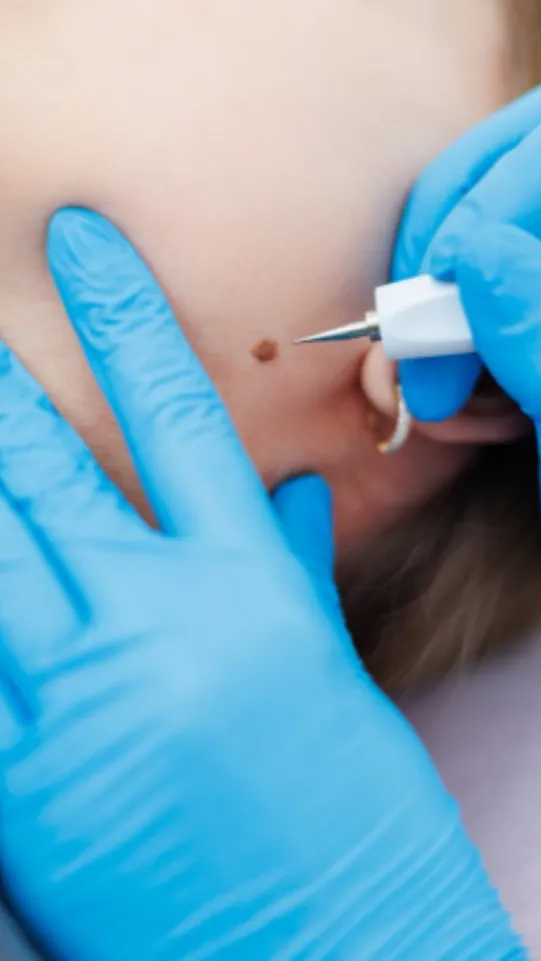
Changes in an existing mole and the appearance of a new unusual pigmented lesion can warrant medical assessment.
Common warning features include
- Increasing asymmetry
- Irregular borders
- Multiple shades within one lesion
- Change in size
- Evolution in appearance
- Bleeding without a clear reason
- Persistent itching in some cases
- A lesion that looks distinctly different from surrounding moles
These signs cannot diagnose melanoma on their own. Clinical examination and appropriate tissue assessment are needed.
Why Pathology Details Matter
Once a suspicious lesion is sampled or removed appropriately, pathology provides information that influences subsequent management.
For cutaneous melanoma, the depth of invasion is particularly important. Other pathological characteristics can also contribute to staging and treatment decisions.
This means patients should keep copies of their pathology reports and previous procedure details when attending an oncology consultation.
What Is the Purpose of Surgery?
For localized melanoma, surgery can play a central role. The aim is to remove the melanoma with an appropriate surrounding margin based on established oncological principles.
The required procedure depends on the characteristics of the primary tumor and its location.
Some patients may also require assessment of regional lymph nodes. A sentinel lymph node procedure can be considered in selected cases based on melanoma features and clinical circumstances.
Not every patient requires identical surgery.
What If Melanoma Has Spread?
When melanoma has spread beyond the original site, management becomes increasingly multidisciplinary.
Imaging, staging investigations and oncology assessment help determine the extent of disease. Systemic therapies have changed melanoma management substantially, with immunotherapy and targeted treatments playing important roles for selected patients.
Surgery may still have a role in certain clinical settings, but decisions depend on the pattern and extent of disease.
Questions to Ask Before a Surgical Procedure
Patients can improve their understanding of the proposed treatment by asking
- What does my pathology report show?
- How deep is the melanoma?
- Has staging been completed?
- How much additional tissue needs to be removed?
- Is lymph node assessment relevant in my case?
- Will reconstruction be required?
- What further oncology treatment might be considered?
- What surveillance plan will follow treatment?
These questions help separate the initial diagnosis from the complete cancer-management plan.
Coordinating Melanoma Care in Mumbai
Patients in Mumbai and surrounding areas of Maharashtra may receive their initial diagnosis through dermatology, surgery or pathology services. Once melanoma is confirmed, coordinated oncology assessment helps determine what further treatment is required.
Dr Mishil Parikh provides surgical oncology evaluation in Mumbai, including assessment of patients whose cancer management may require surgical planning.
Patients should bring previous biopsy reports, pathology slides or blocks when requested, imaging reports, treatment records and a list of current medications to their consultation. Having complete information can reduce uncertainty when the next stage of treatment is being planned.
Melanoma treatment is highly dependent on stage and pathological characteristics. A seemingly small skin lesion can require structured oncological assessment, while treatment beyond surgery may be necessary in more advanced disease.
The most useful next step after diagnosis is therefore to understand the pathology clearly, complete appropriate staging and build treatment around the actual extent of disease rather than the visible skin lesion alone.
Keywords