Pain, swelling, weakness, a limp, or reduced movement after megaprosthesis surgery can result from normal healing, infection, loosening, fracture, dislocation, soft-tissue failure, nerve injury, or tumour recurrence. By the end, you will know which symptoms need same-day care, what tests help separate these causes, and how specialists compare revision, infection treatment, rehabilitation, and other options.
Key takeaways
- Report worsening, resting, or weight-bearing pain promptly.
- Ask about infection, loosening, fracture, instability, and nerve problems.
- Expect imaging, blood tests, and sometimes tissue sampling during assessment.
- Revision treatment depends on the cause and the implant’s stability.
Which symptoms need urgent assessment after megaprosthesis surgery?
Expected pain and swelling after megaprosthesis surgery should gradually improve, respond to the prescribed medication, and follow the rehabilitation plan. Pain that is worsening, appears after a period of improvement, occurs at rest, or prevents movement and weight-bearing needs prompt medical review.
The same symptoms cannot identify infection, loosening, fracture, or tumour recurrence without examination and imaging.
| Feature | More consistent with expected recovery | Needs urgent assessment |
|---|---|---|
| Pain | Gradually easing and controlled by prescribed medicine | Severe, escalating, new at rest, or sudden after a movement or fall |
| Swelling | Local swelling that slowly reduces with elevation | Rapidly increasing swelling, tense skin, uncontrolled bleeding, or a new lump |
| Wound | Dry or slowly healing incision | Persistent drainage, spreading redness, increasing warmth, fever, or worsening wound pain |
| Limb function | Slow, planned improvement in movement and walking | Sudden weakness, inability to bear weight, new deformity, or a hip that appears dislocated |
| Circulation or breathing | No new change | Cold, pale or blue limb; sudden numbness; chest pain; or breathlessness |
Seek emergency care for chest pain, sudden breathlessness, a cold or blue hand or foot, uncontrolled bleeding, rapidly expanding swelling, or an obviously deformed limb. Do not try to force a suspected dislocation back into place.
Contact the surgical team promptly for fever, drainage, increasing warmth, or worsening pain; infection can develop early or after an initial period of improvement. Megaprosthesis pain after surgery in Mumbai still requires the same urgent assessment when these warning signs appear.
What might be causing new pain, weakness, or loss of function?
Pain that returns after a period of improvement deserves a different interpretation from steady postoperative soreness. For someone searching for megaprosthesis problems after limb salvage surgery in Mumbai, the pattern matters, but examination and imaging are still needed because several causes overlap.
- Infection often causes pain that worsens rather than settles, including pain at rest, increasing warmth, redness, swelling, fever, wound drainage, or a new sinus. A deep infection can occur without fever.
- Aseptic loosening usually produces deep, load-related pain, especially when you first stand or walk. The pain may gradually increase over weeks or months.
- Structural implant failure causes sudden pain, a new clunk, loss of support, or abrupt inability to use the limb. Antibiotics will not repair a broken component.
- Soft-tissue failure causes weakness, a limp, instability, or difficulty lifting the limb or straightening the knee. A repaired tendon or muscle can fail after overloading.
- Nerve injury causes burning or electric pain, numbness, altered sensation, or weakness in a specific distribution. Foot drop points to impaired nerve function rather than simple implant pain.
- A periprosthetic fracture causes sudden pain after a fall, twist, or minor force, with inability to bear weight, deformity, or abnormal movement.
- Dislocation produces abrupt severe pain, a changed limb position, shortening or rotation, and a locked or visibly unstable joint.
Tumour recurrence can cause progressively worsening rest or night pain, a growing mass, swelling, or declining function even when the implant looks intact. These limb salvage megaprosthesis problems in Mumbai can coexist, so surveillance imaging may be needed alongside implant assessment.
How will a specialist find the cause of a megaprosthesis problem?
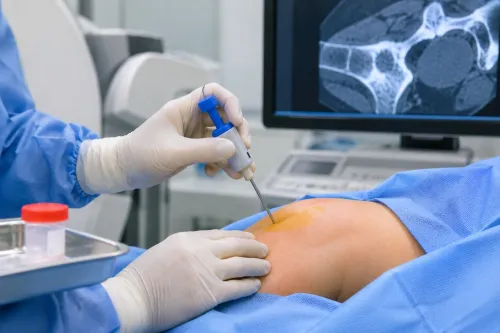
Examination starts the investigation: the specialist checks the wound, warmth, drainage, tenderness, limb alignment, length, pulses, sensation, muscle power, active straight-leg raise, gait, and joint stability. Your pain pattern and the time since surgery then guide the tests; no single symptom identifies the cause.
Bring the complete record, including:
- Operative report, implant make, model, sizes, and serial numbers
- Original pathology report, tumour margins, and later biopsy results
- Previous and current radiographs, CT or MRI scans, microbiology reports, and rehabilitation or weight-bearing instructions
| Suspected problem | Findings that support it | Tests that help confirm it |
|---|---|---|
| Infection | Drainage, warmth, swelling, persistent rest pain, loosening, or unexplained failure; fever can be absent | Blood count, C-reactive protein, erythrocyte sedimentation rate, radiographs, and image-guided aspiration for cell count and cultures |
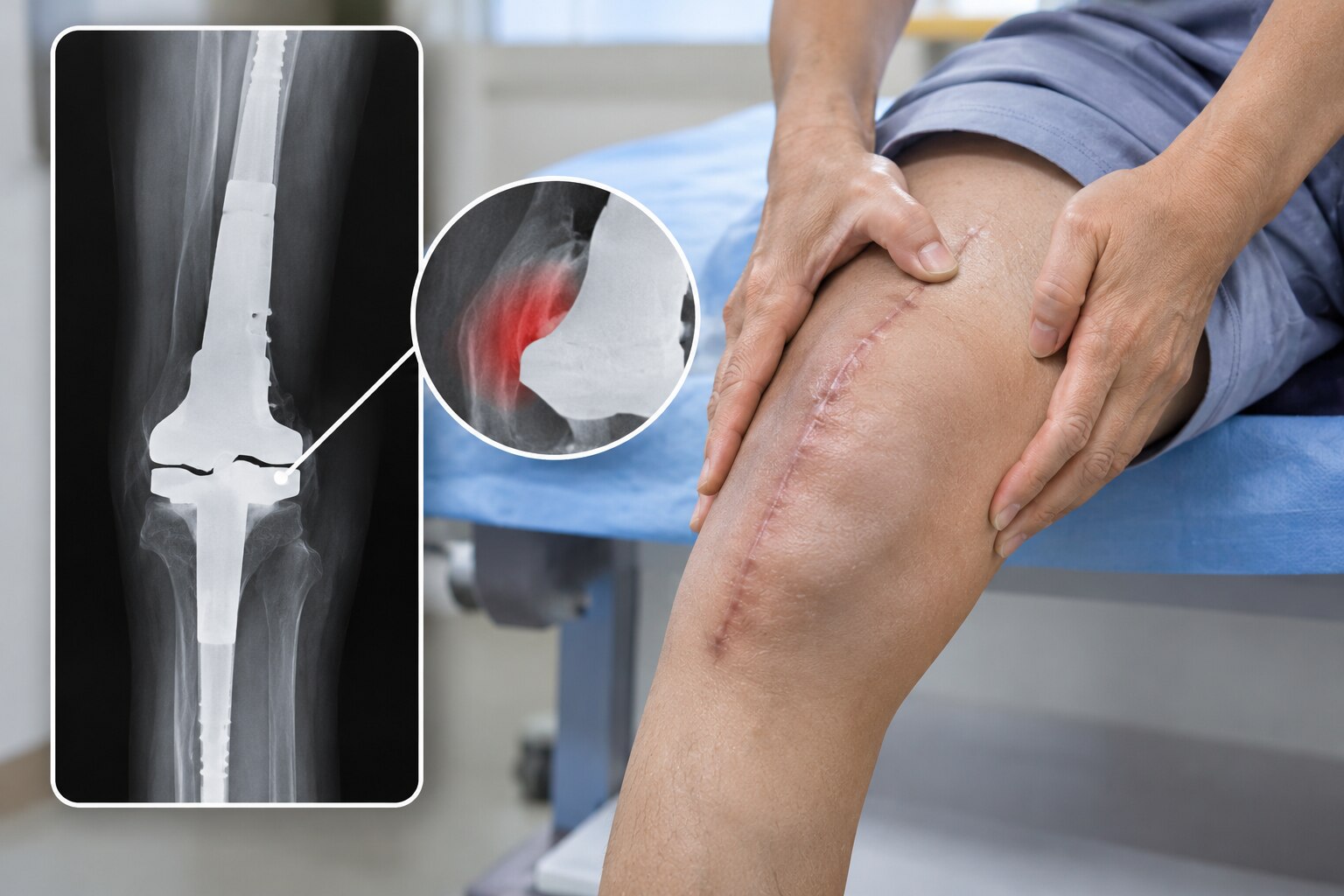
| Aseptic loosening | Pain with weight-bearing and a progressive radiolucent line or implant migration | Serial radiographs; CT defines bone loss and component position |
| Fracture or structural breakage | Sudden pain, deformity, shortening, or loss of function after a load or fall | Immediate radiographs and CT |
| Soft-tissue failure | Giving-way, poor active straight-leg raise, instability, or a limp without implant change | Examination, radiographs, and MRI with metal-artifact reduction for tendons and muscle |
| Tumour recurrence | New mass, increasing rest pain, or progressive swelling | MRI, CT of the chest when indicated, and image-guided biopsy; pathology provides the diagnosis |
For megaprosthesis complications in Mumbai, ask the specialist to state whether infection, recurrence, mechanical failure, or soft-tissue dysfunction leads the differential before recommending revision.
How are infected, loose, broken, or unstable megaprostheses treated?
Revision depends on the failure, not pain alone. Doctors weigh infection, loosening, implant breakage, fracture, instability, tumour status, remaining bone, soft-tissue coverage, general health, and the function a salvage procedure could realistically restore.
- Debridement plus culture-directed antibiotics can preserve a well-fixed implant when infection is detected early and the wound and soft tissues remain viable. It will not repair loosening or a broken component.
- Staged revision removes infected implants and cement, controls infection with surgery and antibiotics, then places a new megaprosthesis after infection has cleared. This is more demanding but safer for established or deep infection.
- Component revision replaces only the loose, worn, or broken part when the remaining reconstruction is sound. Replacing everything unnecessarily sacrifices bone and increases surgical risk.
- Fixation treats a periprosthetic fracture when stable bone stock and implant support permit repair. Poor bone or an unstable implant may require revision instead.
- Soft-tissue reconstruction repairs failed tendons, muscle coverage, or the extensor mechanism. A brace and targeted rehabilitation may suit partial failure; recurrent giving-way or inability to raise the leg can require reconstruction.
- Custom reconstruction uses patient-specific planning when standard components cannot bridge the bone defect or restore alignment.
- Amputation becomes an option when infection, tumour, bone loss, or repeated failure makes a safe, useful limb unlikely.
- Non-operative care—brace, protected weight-bearing, pain treatment, and surveillance—fits selected patients who are medically unfit for surgery or have limited expected benefit.
For limb reconstruction problems in mumbai or megaprosthesis complications in mumbai, Dr Mishil Parikh should receive the operative report, implant details, pathology, cultures, serial radiographs, and rehabilitation restrictions before recommending revision.
Related service
Limb Salvage Surgery also known as limb-sparing surgery, is a procedure performed to remove a tumor or manage a severe injury in a limb while preserving the limb itself. View service → |
What should you prepare for during revision and long-term follow-up?
Prepare for a staged recovery, not a quick return to normal activity. After revision for infection, loosening, fracture, or soft-tissue failure, your surgeon will set procedure-specific limits for weight-bearing, knee or hip movement, brace use, driving, and lifting. Pain relief does not prove that the implant or repair is ready for extra load.
- Keep a written schedule for wound checks, antibiotics, blood tests, radiographs, physiotherapy, and oncology surveillance. Take every antibiotic exactly as prescribed; do not stop because drainage or pain has improved.
- Ask which component was revised, how much bone remains, whether the soft-tissue repair is secure, and the exact date or test that permits increased weight-bearing.
- Bring the operative report, implant stickers or serial numbers, pathology and margin results, microbiology reports, and every radiograph or scan to a second opinion. This is essential when investigating megaprosthesis problems after limb salvage surgery in mumbai.
- Report new rest pain, fever, drainage, increasing swelling, a new limp, limb shortening, a fall, or sudden loss of function before your next appointment. Do not “test” the reconstruction by walking farther or exercising harder.
Long-term follow-up should include an orthopaedic oncology surgeon, physiotherapist, infectious-disease specialist when infection is involved, and rehabilitation or pain specialists when needed. Scheduled examinations and serial radiographs can detect loosening, fracture, wear, or recurrence before function collapses. Ask who coordinates these visits and what symptoms require same-day review.
Persistent megaprosthesis pain after surgery in mumbai deserves assessment, not automatic revision.
Frequently asked questions
Which symptoms need urgent assessment after megaprosthesis surgery?
Seek prompt medical review for worsening pain, pain at rest, new swelling or redness, wound drainage, fever, weakness, sudden loss of function, or difficulty bearing weight.
What can cause new pain, weakness, or loss of function?
Possible causes include infection, implant loosening, structural breakage, instability or dislocation, fracture around the implant, muscle failure, and nerve irritation or injury.
How is the cause of a megaprosthesis problem diagnosed?
A specialist examines the limb and reviews your surgical history, then may order X-rays, blood tests, CT or MRI, joint-fluid testing, or tissue samples.
How are infected, loose, broken, or unstable megaprostheses treated?
Treatment can include antibiotics, washout, component exchange, full revision, fracture fixation, soft-tissue reconstruction, or implant removal, depending on the cause.
What should you prepare for during revision and long-term follow-up?
Prepare for staged treatment in some infections, protected weight-bearing, physiotherapy, wound monitoring, repeat imaging, and lifelong surveillance for implant or tumour-related problems.
Keywords