
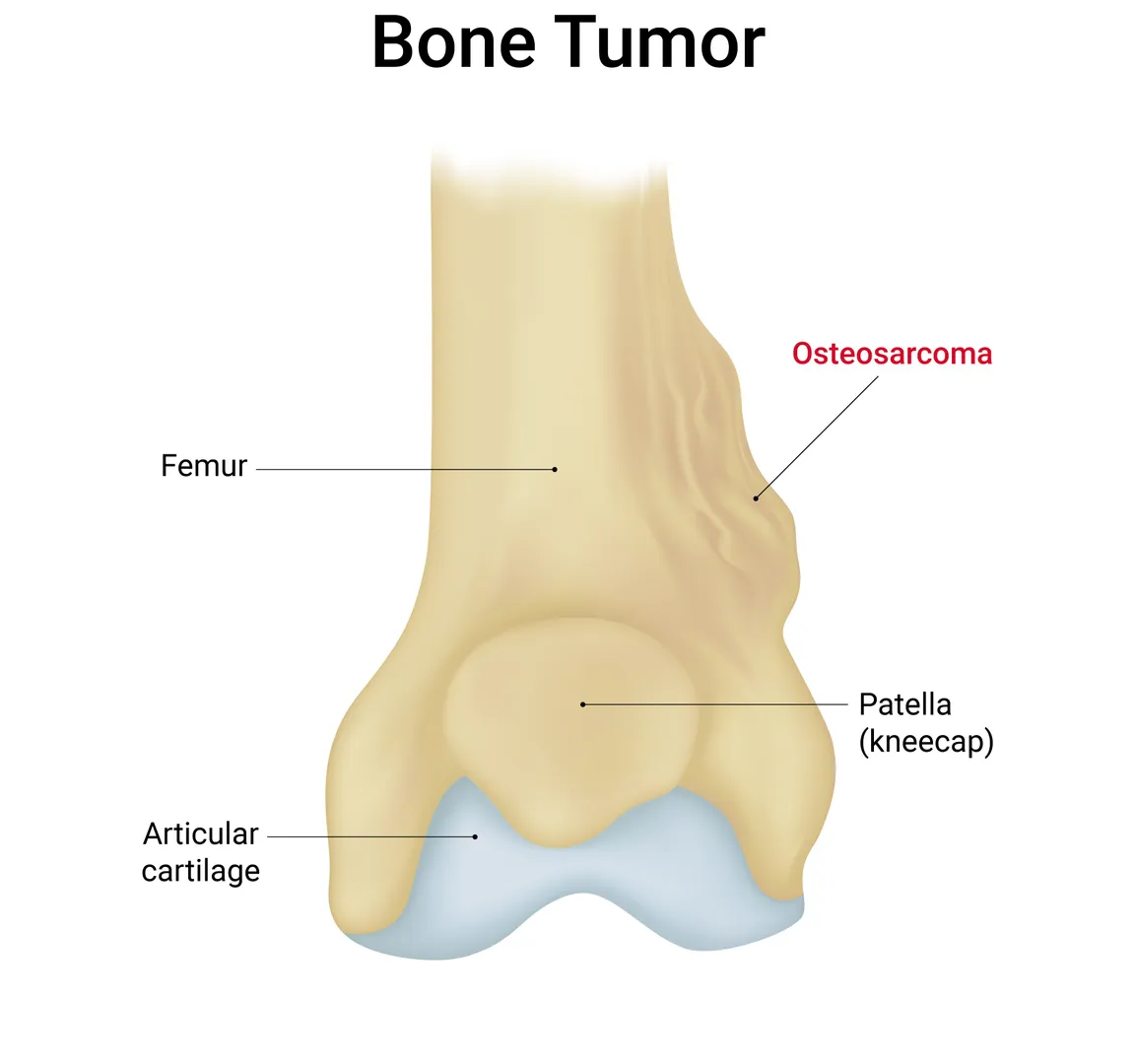
Bone tumors can develop when cells within bone begin growing abnormally. Some bone tumors are benign, while others are malignant and require cancer-focused treatment. Because early symptoms may resemble common orthopedic problems, people sometimes delay evaluation, particularly when pain is initially mild.
For patients in Mumbai and other parts of Maharashtra, understanding the warning signs of bone tumors can help determine when persistent bone symptoms deserve further investigation.
What Is a Bone Tumor?
A bone tumor is an abnormal growth of tissue within a bone. These growths can arise directly from bone tissue or develop when cancer from another part of the body spreads to the skeleton.
Primary malignant bone tumors are relatively uncommon. Important examples include osteosarcoma, Ewing sarcoma and chondrosarcoma. Each behaves differently and may require a different diagnostic and treatment approach.
Not every lump, bone lesion or persistent pain indicates cancer. Proper imaging and, when indicated, a carefully planned biopsy are needed before the nature of a suspicious lesion can be established.
Symptoms That Should Be Evaluated
Bone tumors can present differently depending on their location, size and biological behaviour. Possible warning signs include
- Persistent pain in a specific bone
- Pain that progressively becomes more troublesome
- Swelling near a bone or joint
- A noticeable lump
- Reduced movement near the affected area
- Unexplained fracture after relatively minor trauma
- Persistent symptoms that do not improve as expected
- General symptoms such as fatigue or unexplained weight loss in some cases
Pain is especially important when it persists without a clear explanation. A sports injury or muscle strain usually follows a recognisable pattern of improvement. Tumor-related symptoms may continue or gradually become more noticeable.
How Are Suspicious Bone Lesions Investigated?
Evaluation usually starts with a detailed medical history and physical examination. Imaging is then selected according to the suspected problem.
An X-ray can reveal changes in the structure of the bone. MRI provides more detailed information about the lesion and surrounding muscles, nerves, blood vessels and joints. CT scans and additional investigations may be required depending on the clinical findings.
If imaging suggests that a tumor may be present, a biopsy can provide tissue for pathological examination.
Biopsy planning is particularly important in suspected bone cancer. The biopsy route should be chosen with future definitive surgery in mind. An inadequately planned biopsy can complicate subsequent tumor removal.
Why the Exact Diagnosis Matters
Bone tumor describes a broad group of conditions rather than one disease. Treatment depends heavily on the exact diagnosis.
A benign lesion may only require monitoring in selected circumstances. Another benign but locally aggressive tumor may need surgery. A malignant bone tumor can require chemotherapy, surgery, radiotherapy or a carefully planned combination depending on the tumor type.
This is why treatment should not begin solely on the basis of symptoms or an imaging report.
What Happens After a Diagnosis?
Once pathology confirms the tumor type, further investigations may be performed to understand its extent. Doctors assess whether the disease remains localized and how closely it involves important structures.
For tumors in an arm or leg, surgical planning also considers future limb function. Modern orthopedic oncology increasingly focuses on removing the cancer safely while preserving useful function whenever medically feasible.
People undergoing evaluation in Mumbai may need coordination between imaging specialists, pathologists, medical oncologists, radiation oncologists and orthopedic oncology surgeons.
Do Not Ignore Persistent Bone Symptoms
Most everyday aches are not caused by bone cancer. At the same time, unexplained symptoms that persist should not simply be attributed to exercise, age or an old injury without appropriate assessment.
A person with a suspicious bone lesion can benefit from evaluation before undergoing an unplanned procedure. Dr Mishil Parikh provides specialist assessment in Mumbai for patients with suspected and diagnosed musculoskeletal tumors.
A structured diagnosis establishes what the lesion actually is, how extensive it may be and what treatment approach is appropriate. For anyone dealing with unexplained bone pain, swelling or a newly detected bone lesion, getting the diagnosis right is the essential first step.
Keywords