Osteosarcoma is a primary bone cancer that develops from bone-forming cells. It is seen most commonly in children, teenagers and young adults, although it can occur at other ages. Receiving an osteosarcoma diagnosis can raise immediate questions about treatment, surgery and whether the affected limb can be preserved.
For families seeking cancer care in Mumbai, understanding how osteosarcoma is assessed can make the treatment process easier to navigate.
Where Does Osteosarcoma Commonly Develop?
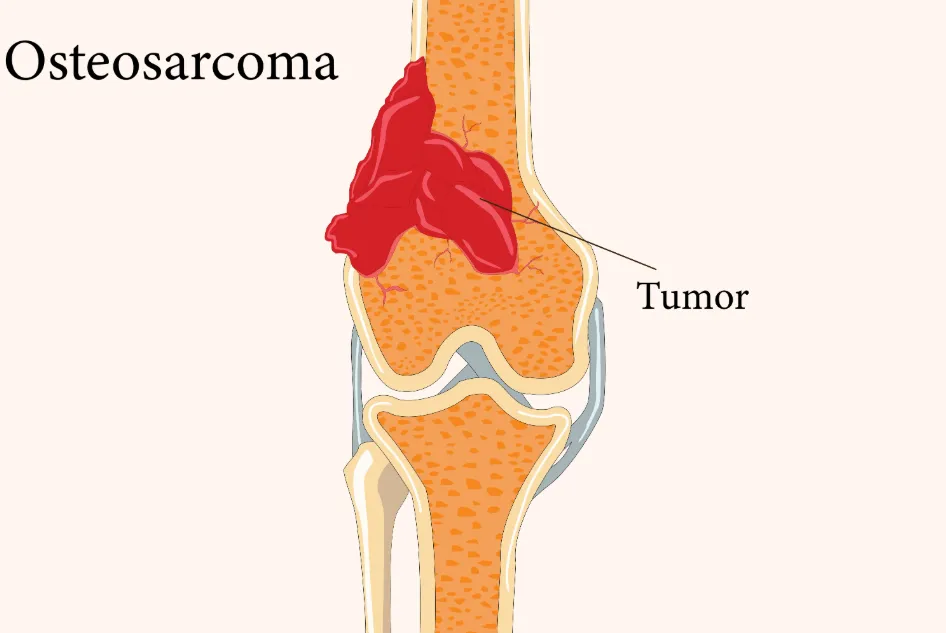
Osteosarcoma often develops in the long bones, particularly around the knee. The lower end of the thigh bone and upper end of the shin bone are frequent sites. It can also affect the upper arm and other bones.
Symptoms can initially resemble sports injuries or growing pains, especially in younger patients.
Possible signs include
- Persistent localized bone pain
- Swelling around the affected area
- Increasing discomfort with activity
- Restricted movement near a joint
- A noticeable mass
- Fracture through weakened bone in some cases
Persistent symptoms deserve attention when they fail to settle as expected.
How Is Osteosarcoma Diagnosed?
Diagnosis usually involves imaging followed by biopsy.
An X-ray may identify a suspicious bone lesion. MRI is particularly useful for understanding how much of the bone is involved and whether the tumor extends into surrounding soft tissues.
Additional imaging may be required to assess other areas of the body and determine the stage of disease.
A biopsy is performed to obtain tissue that a pathologist can examine. This is a crucial step because imaging alone cannot establish every detail required for treatment planning.
The biopsy should ideally be planned by a team familiar with definitive tumor surgery. Its position matters because the biopsy tract generally needs to be considered during later surgical removal.
Why Treatment Requires More Than Surgery Alone
Osteosarcoma treatment commonly involves systemic therapy and surgery. The exact sequence and treatment plan depend on the individual diagnosis, stage, tumor location and overall health.
Chemotherapy plays an important role in many conventional high-grade osteosarcoma treatment plans. Surgery focuses on removing the primary tumor with an appropriate margin.
Following preoperative treatment, doctors assess the patient again before proceeding with definitive surgery.
Can the Limb Be Preserved?
One of the first concerns for many patients with osteosarcoma of an arm or leg is whether amputation will be required.
In many appropriately selected cases, limb-salvage surgery may be possible. The surgeon removes the tumor while attempting to preserve the limb and reconstruct the resulting bone or joint defect.
Whether this approach is suitable depends on factors including
- Tumor size
- Tumor location
- Relationship with major nerves and blood vessels
- Response to treatment
- Possibility of achieving an adequate surgical margin
- Expected function after reconstruction
Preserving a limb is not the only objective. Effective cancer removal remains the primary surgical priority.
What Happens After Surgery?
Recovery depends on the location and extent of surgery as well as the reconstruction performed. Rehabilitation is often an important part of regaining mobility, strength and independence.
Patients may continue systemic treatment according to their oncology plan. Follow-up is also essential because surveillance helps doctors look for recurrence and monitor other areas where osteosarcoma can potentially spread.
Why Specialist Planning Matters
Osteosarcoma is not managed like a routine orthopedic condition. Diagnosis, biopsy, cancer treatment, tumor removal and reconstruction need to fit into one coordinated plan.
In Mumbai, Dr Mishil Parikh evaluates patients with bone tumors and musculoskeletal cancers, including individuals requiring surgical planning for osteosarcoma.
Families should use consultations to understand the pathology, extent of disease, proposed treatment sequence, surgical possibilities, rehabilitation expectations and follow-up requirements.
An osteosarcoma diagnosis brings many decisions, but those decisions become clearer when they are based on accurate pathology, appropriate staging and coordinated multidisciplinary planning.
Keywords